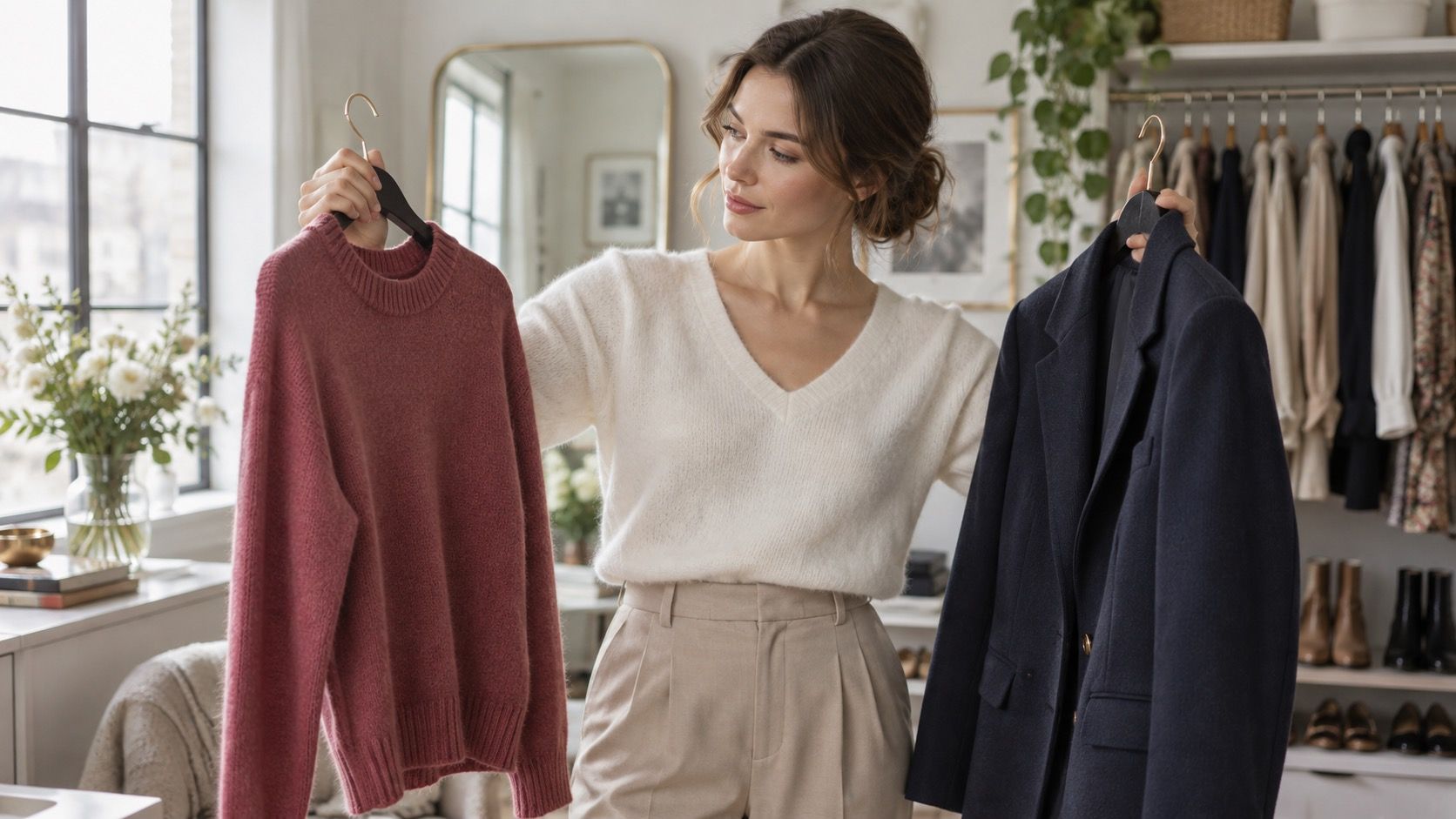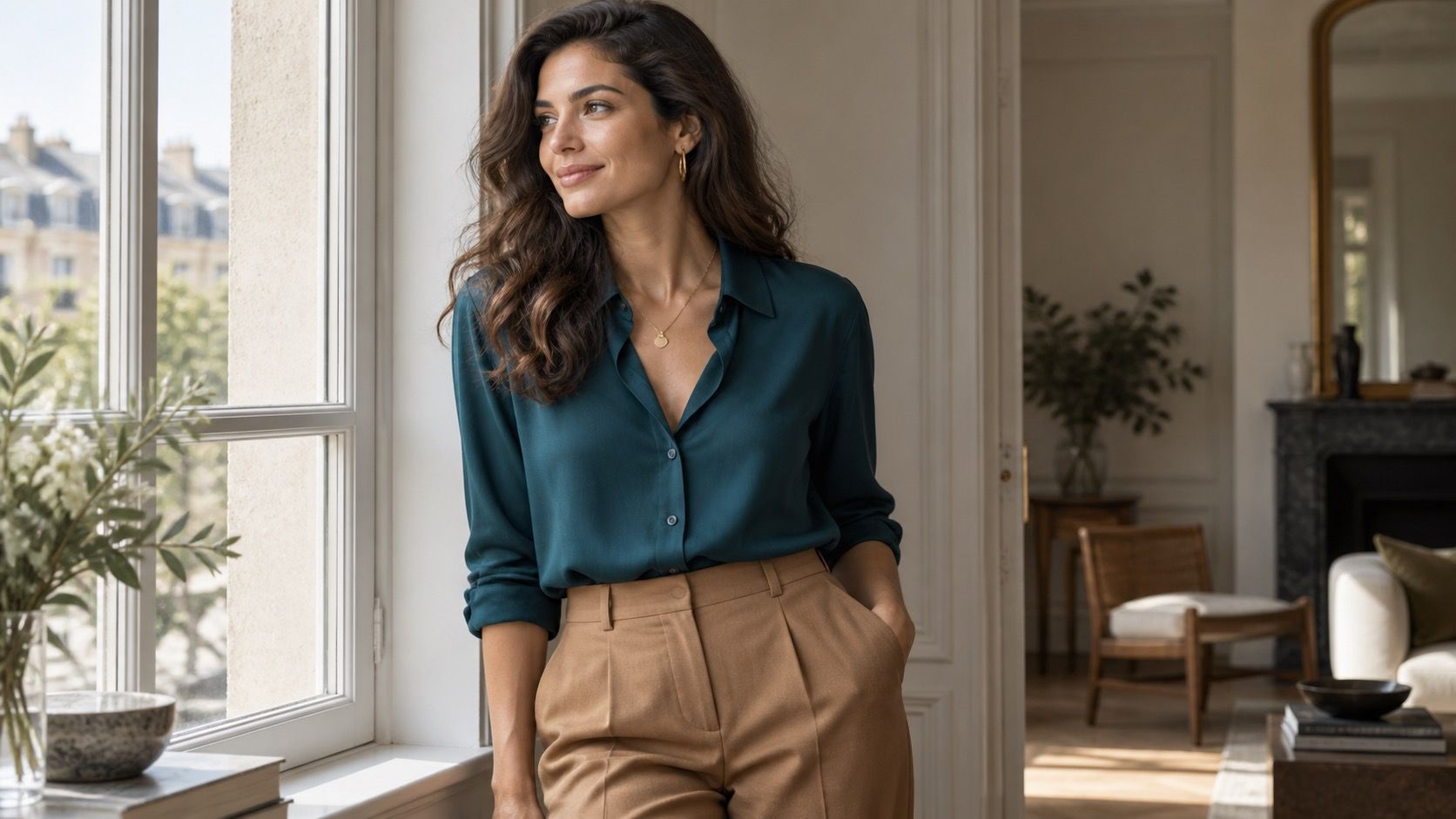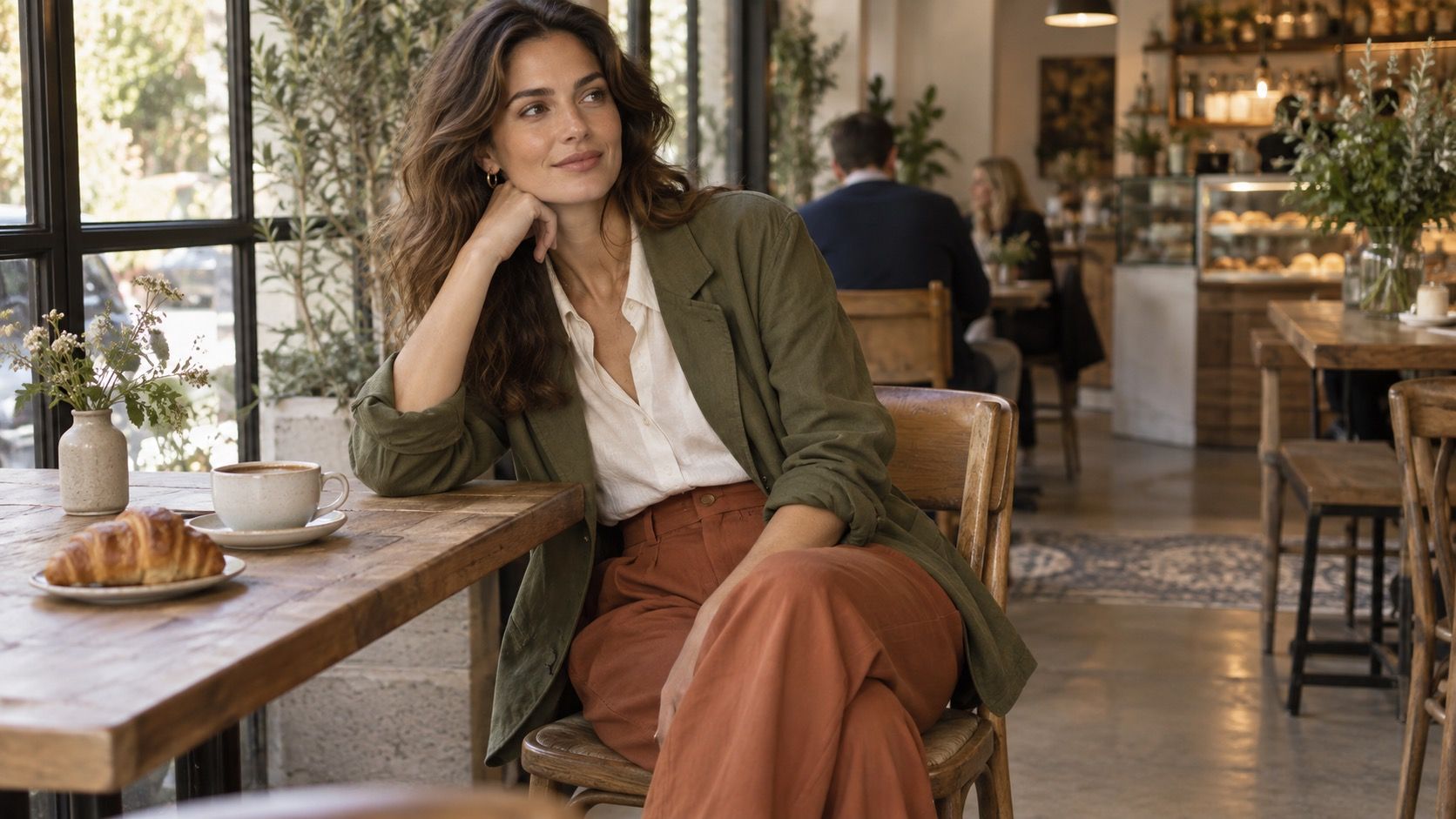
Warm undertone clothing advice gets reduced to orange, mustard, and camel so often that it can make a useful palette sound like a theme restaurant. Warmth is more nuanced. The clothes that tend to support golden or warm olive skin have yellow, red, or softened earthy notes, yet their depth and saturation still matter. The aim is not to wear a paint chart; it is to build outfits in which the face looks rested and the color feels chosen.
Use warmth without making every outfit orange
If you have yellow undertone skin, you may find peach, tomato red, warm ivory, moss, and rust easier than icy pink, blue-red, or bright optical white. That is a starting point, not a uniform. A warm undertone can wear blue, gray, black, and pink; the useful question is which version. Dusty teal is often friendlier than icy aqua, olive is easier than mint, and deep chocolate may be softer near the face than a blue-black sweater.
Choose cream, beige, and brown with some precision
Try colors in daylight before giving them a permanent place in the wardrobe. Stand near a window with a warm coral top and a cool fuchsia top. Notice whether one makes the skin look even while the other exaggerates shadows around the mouth or nose. If you tan easily, repeat the comparison in winter. Seasonal changes in surface color can alter the depth you prefer, but the underlying pull toward warmth usually remains.
Warm neutrals do much of the heavy lifting. Ivory, oatmeal, camel, cognac, warm taupe, chocolate, and tobacco brown can make a wardrobe feel coherent before a single bright color is added. Bright white is not forbidden, but it can create a sharp, chilly contrast against golden skin. Ivory carries enough softness to look intentional with denim, navy, olive, and terracotta.
Beige is where people get careless. A pale beige too close to your skin can erase the outline of your face, even if it is technically warm. Create separation with a neckline, a darker jacket, a printed scarf, or jewelry. Camel is strong when it has depth, but a very yellow camel can look cartoonish beside a saturated mustard top. Keep one of them quieter: camel with cream and olive, or mustard with dark denim and brown leather.
| Color | Good use in an outfit | Watch for |
|---|---|---|
| Ivory or oatmeal | Shirts, knitwear, light layers near the face | Too much beige without contrast |
| Camel or cognac | Coats, belts, shoes, trousers | Pairing with several competing yellows |
| Moss or olive | Utility jackets, tees, wide-leg trousers | Very gray olive if it drains your complexion |
| Terracotta or coral | Blouses, dresses, scarves, summer tops | Neon orange and overly shiny fabric |
Bring in accent colors that have some earth underneath
The best accent colors for a warm olive skin tone do not need to be loud. Terracotta, brick red, warm coral, marigold, moss, petrol teal, aubergine with red warmth, and warm turquoise can all add life. The practical choice is often a muted or medium shade. A clay-red cardigan works with ecru trousers and dark denim far more often than a blazing orange one. Moss behaves almost like a neutral, making it an easy bridge between brown shoes and a blue jean.
When you want a brighter outfit, choose one warm focal color and give it a calm base. Coral with ivory and tan is simple for summer. Brick red with dark indigo and cognac looks grounded in colder months. A green dress can work with gold hardware, but select an olive, fern, or moss tone rather than a cool emerald if emerald makes your face look sallow. The mirror is more reliable than the name on the hang tag.
Use prints and metals to keep the palette balanced
Gold jewelry, bronze, brass, and tortoiseshell often settle naturally into warm palettes because they repeat the warmth already present in camel, ivory, and rust. They do not need to match perfectly. A brushed silver watch can still look good with a warm skin tone, especially next to navy or denim. What usually feels awkward is a pile of metals and colors all asking to be the focal point at once.
For prints, look for mixtures that contain a warm neutral: navy with tan, cream with rust, olive with ivory, or a floral with coral and brown stems. A small print is easier if your features are soft; a bolder check or stripe can carry more contrast. Before buying a print, identify the color closest to your face. If it is an icy lavender or stark white that you never wear well alone, the print may not rescue it.
Adjust the depth for summer, winter, and real life
What colours suit my skin tone can change with the season because clothes, light, and surface tan change. In bright summer daylight, warm ivory, faded denim, coral, olive, and sand feel easy. Save the heavy chocolate coat and dense rust knit for cooler weather, when they look rich rather than overwhelming. This is a styling adjustment, not proof that your undertone changed between April and October.
For work, try an ivory blouse, olive trousers, and a cognac belt; it is more forgiving than a stark white shirt and black trousers. For weekend errands, moss chinos, a warm striped tee, and tan sneakers have enough variation to look assembled. For dinner, a terracotta top with dark jeans and a simple gold earring gives color without fuss. If you need black for an event, put warmth back near the face with coral lipstick, a gold earring, or a warm-toned scarf.
A warm palette works best when it feels edited, not themed. Start with ivory, camel, dark denim, and one brown leather piece, then add moss, coral, or terracotta according to the occasion. That leaves space for personal taste and makes the colors easier to wear repeatedly, which is the only wardrobe test that counts after the fitting-room mirror has lost its charm.
Warm color does not have to mean constant brightness. A low-saturation palette of oatmeal, olive, tobacco, dark denim, and muted brick red is often more useful than a rack of clear yellows. It gives you choices for offices, travel days, and casual dinners while allowing a stronger coral or marigold piece to feel deliberate. If you are unsure about a new shade, buy it first as a tee, scarf, or bag. After a few wears, you will know whether it makes its way into real outfits or only looks good beside the checkout counter.