Brown skin holds an enormous range of depths and undertones, so a universal list of flattering colors is less useful than it sounds. Some people look electric in saturated cobalt, others prefer a softened blue; some find cream luminous while others choose warmer ivory. The strongest wardrobe choices come from noticing the depth, temperature and intensity that make your complexion look alive, then using those clues in outfits you can actually repeat.
Start with depth and saturation, not a one-size category
Put a pale gray, a medium cobalt and a deep chocolate top beside your face in daylight. The comparison shows how much depth your features naturally carry and how much contrast feels comfortable. A deeper complexion may make a light neutral look beautifully graphic, or it may need a warmer or clearer version to avoid a chalky effect. A medium complexion may enjoy both soft and saturated shades depending on hair color and the level of contrast in the rest of the outfit.
Find warm, cool and neutral directions through comparison
Saturation is the second dial. Jewel tones such as emerald, sapphire, amethyst and ruby have a clear, rich intensity. Dustier colors such as muted rose, slate blue and soft olive contain more gray. Neither group belongs to one skin tone. If a bright garment seems to arrive in the room before you do, compare it with a softened version. If muted colors leave the face looking flat, a more saturated color may provide the needed lift. The best colors for brown skin are the colors that give the face presence rather than competing with it.
Undertone can make a useful difference without reducing anyone to one label. Compare a warm marigold with a cooler lemon, tomato red with blue-red, and chocolate with charcoal. Observe whether the skin looks more even, whether natural lip color stays visible, and whether the garment seems connected rather than pasted on. Repeat in daylight because store lighting can make warm colors look friendlier than they do outside. Keep the results specific: perhaps marigold works better than lemon, while cobalt works better than teal.
Do not assume warm skin can only wear warm colors or cool skin can only wear cool ones. A cool red can look striking on a warm-leaning complexion when its depth is right; a warm brown can be excellent on cool skin when it is rich enough. Fabric finish matters here. A matte coral may feel balanced while a shiny coral satin reflects more orange into the face. Use the undertone result as a shopping shortcut, then let the mirror and real outfits have the final vote.
Use light neutrals without losing the shape of the outfit
Cream, ivory, stone and soft white can look exceptionally clean against brown skin, but their temperature and opacity matter. A cool optic white produces sharp contrast; a buttery cream feels softer and warmer; a beige that is too close to the skin depth may make the top disappear unless the texture is distinct. Test a white shirt with your usual trousers and look at it in open shade. The goal is not to avoid a close color, but to make sure the outfit still has a readable shape.
Texture is an easy solution. Ribbed cream knitwear, linen in warm ivory, a white shirt with dark stitching, or a chocolate belt over a pale dress all create definition without adding loud color. If you love pale neutrals, pair them with a deeper shoe, jacket or bag rather than assuming every element needs contrast. Light colors can be calm and polished; they simply benefit from a deliberate anchor somewhere in the outfit.
| Color direction | First shade to try | Balanced pairing |
|---|---|---|
| Cool saturated | Cobalt or sapphire | Cream, charcoal or dark denim |
| Warm saturated | Marigold, paprika or warm red | Chocolate, olive or ivory |
| Deep neutral | Espresso or midnight navy | Soft white or muted pink |
| Light neutral | Cream, ivory or stone | Deep brown accessories or strong denim |
Make jewel tones wearable rather than ceremonial
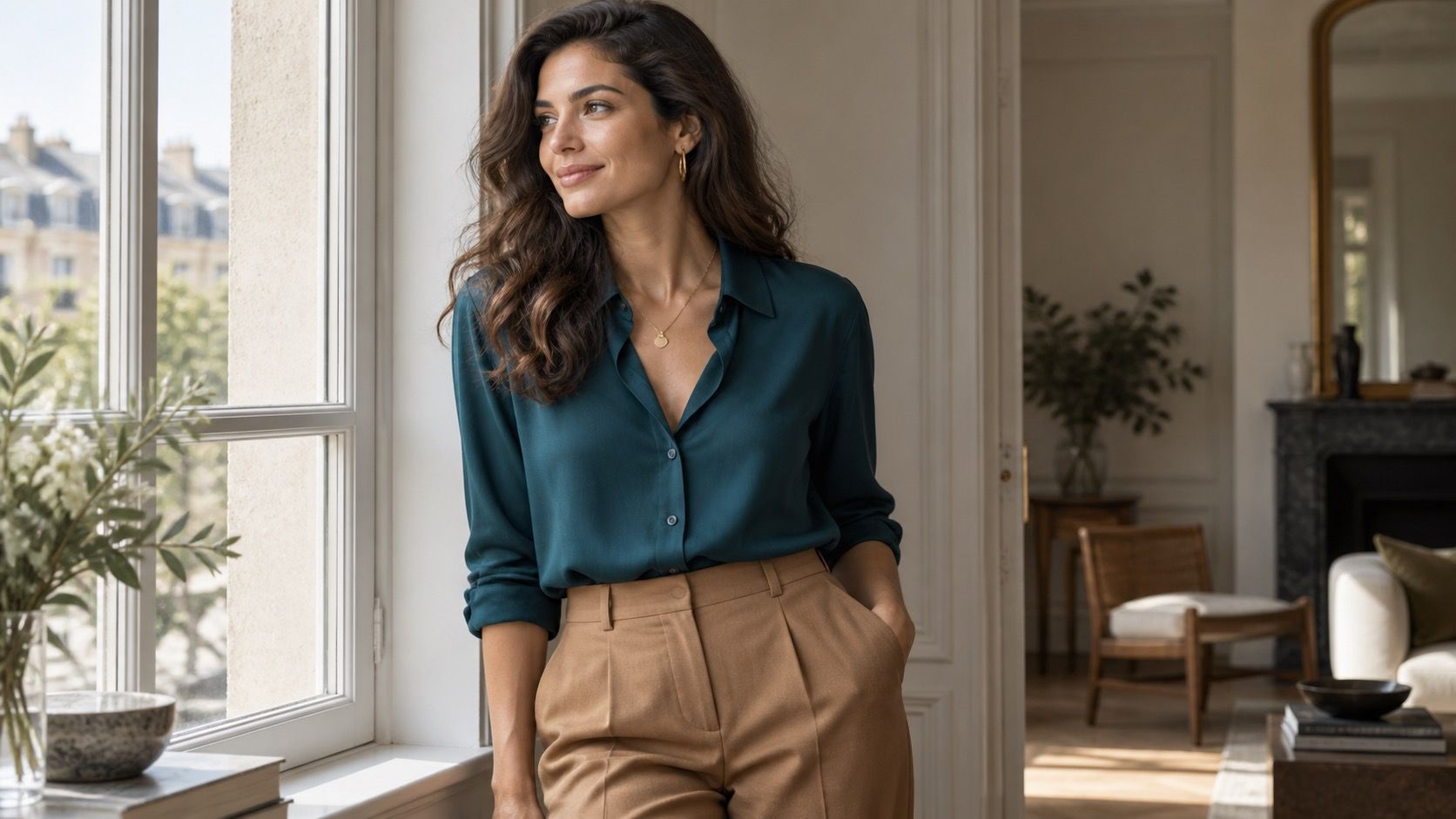
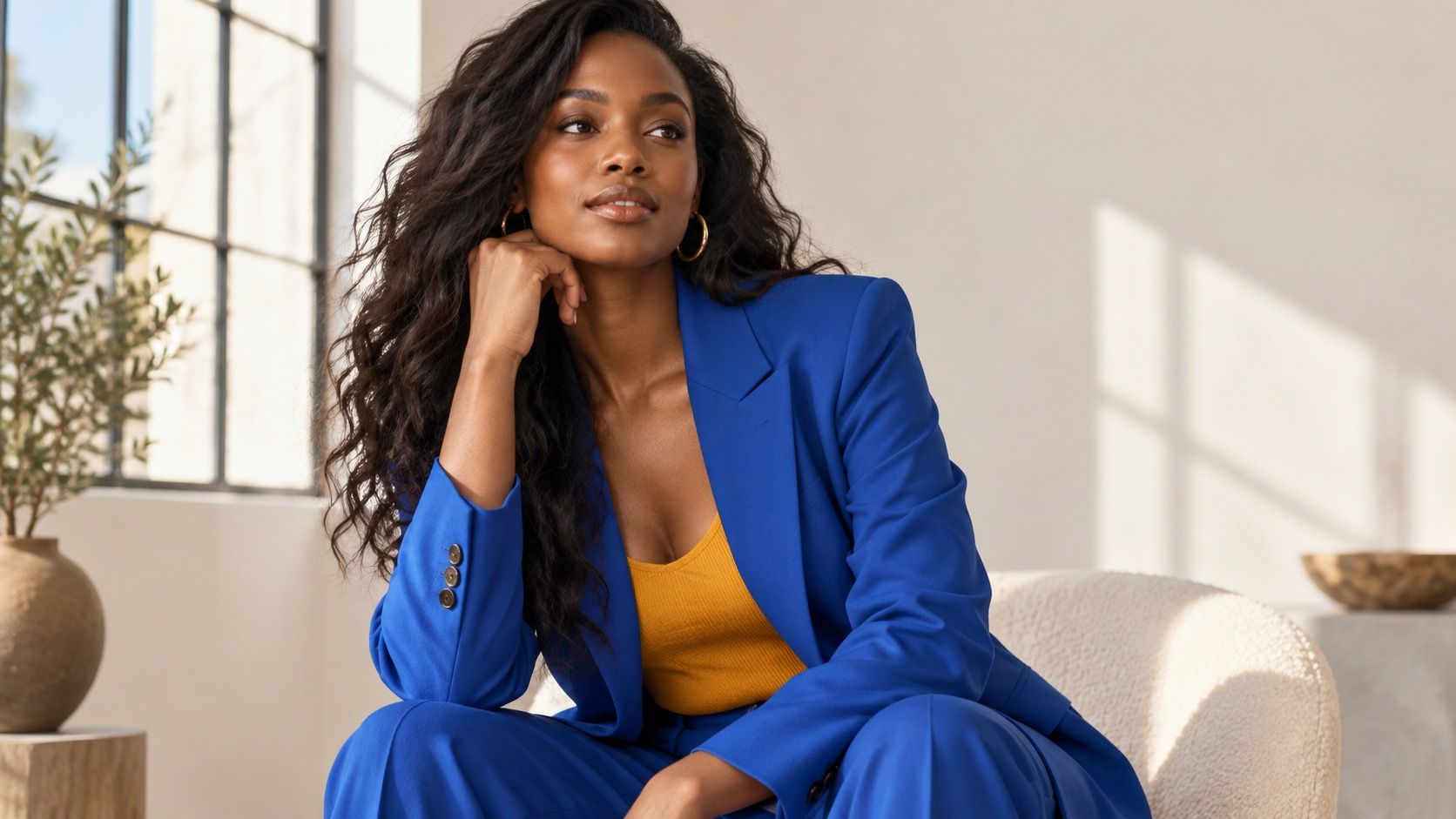
Jewel tones are often recommended because their saturation can create clear, beautiful contrast against many brown skin tones. The problem is that a whole outfit of emerald, gold hardware and matching lipstick can feel more like an occasion costume than clothes for a Tuesday. Give the color one job. An emerald sweater with relaxed dark denim, a cobalt shirt with cream trousers, or a ruby skirt with a simple charcoal knit keeps the richness while leaving room for the person wearing it.
For a quieter version, choose jewel tones in texture rather than wall-to-wall brightness: a matte sapphire tee, a soft plum cardigan, a dark teal overshirt. If neon appeals to you, use it as a small accent first. Neon can look fantastic, but its sharp intensity makes fabric, lighting and makeup more important. A fluorescent bag or sneaker is a low-risk test before a full near-face top. Style becomes easier when color intensity is chosen deliberately, not merely because it was described as flattering.
Create monochrome and contrast outfits with intention
Monochrome dressing can be especially useful because it lets depth and texture do the work. Try chocolate trousers with a cocoa knit and a slightly lighter brown coat, or deep navy with a lighter blue shirt. The shades do not have to match exactly; a small shift in value keeps the outfit from looking like a uniform. Add a cream collar, a metal earring or a patterned shoe when you want a clearer break near the face.
For stronger contrast, use a light neutral with a deep solid color: ivory and cobalt, cream and forest, white and espresso. Photograph the combination outdoors before buying duplicates. What colors look good on brown skin changes with undertone, hair, personal taste and how close the garment sits to the face. Build from repeated evidence, keep the colors that make you look alert and comfortable, and allow the bolder options to become choices rather than obligations.
Keep an eye on the setting as well. A cobalt blouse that feels vivid in bright daylight can become the only visible thing in an evening restaurant, while a chocolate monochrome outfit may gain depth under warm light. Testing new pieces where you actually spend time gives a more useful answer than a flattering store mirror.