A Soft Summer capsule wardrobe is often shown as a row of beautiful muted swatches, then somehow translated into fifteen nearly identical gray tops. The useful version has more character than that. Soft Summer colors are cool, muted, and low to medium in contrast, but they still need shape, texture, and a little depth to survive a normal workweek. A capsule should make getting dressed easier, not turn every purchase into a color-analysis exam.
Keep the palette soft without making it bland
Soft Summer sits on the cool and muted side of seasonal color analysis. Think soft navy, smoky blue, mushroom, dove gray, dusty rose, muted plum, sage that leans gray, and denim with a faded finish. The colors look slightly softened rather than chalky or bright. A useful visual test is whether the shade resembles it has a tiny amount of gray mixed in; if it feels neon, icy, or very yellow, it will usually fight the rest of the palette.
Choose twelve core pieces that can work in rotation
That does not mean every item must look faded. A capsule needs a few deeper anchors such as soft navy, charcoal, or muted aubergine, otherwise light gray, pale pink, and blue can merge into one foggy outfit. Keep the strongest colors in matte fabrics or smaller doses. A smoky berry sweater can provide enough focus, while a glossy bright magenta dress is likely to wear the person rather than the other way around.
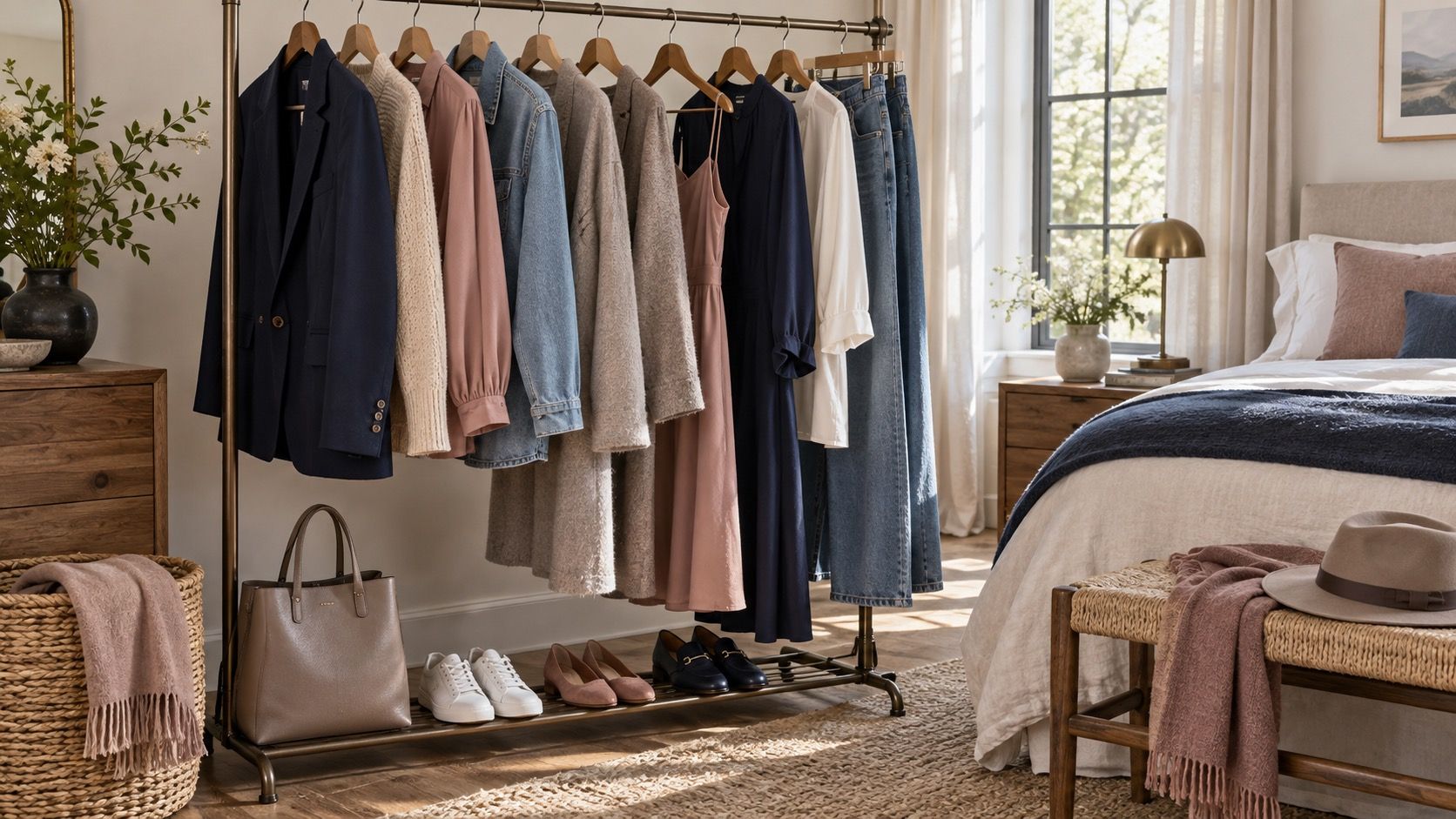
Start with the clothes you genuinely repeat, then make them cooperate. A practical Soft Summer capsule could include a soft navy blazer, a mushroom cardigan, a blue-gray knit, a dusty rose top, a muted plum blouse, a soft white tee, medium-wash denim, charcoal trousers, a gray-blue skirt or relaxed trouser, a soft navy dress, a muted print, and one outer layer in dove gray or mushroom. Twelve pieces are enough to make decisions simpler without requiring a shopping project.
The point is not to buy exactly twelve things. A capsule can be six pieces for a short trip or twenty pieces for a season. What matters is that each item joins at least three outfits. Before adding a top, place it mentally beside your denim, dark neutral, and light neutral. If it works with only one hero item, it is a special occasion piece, not a foundation. That distinction prevents a wardrobe from filling with pretty orphans.
| Capsule role | Soft Summer choice | Combines well with |
|---|---|---|
| Dark anchor | Soft navy blazer or knit | Mushroom, denim, dusty rose, muted print |
| Light neutral | Soft white or dove gray tee | Charcoal, soft navy, gray-blue |
| Color accent | Dusty rose or muted plum top | Denim, mushroom, soft navy |
| Everyday bottom | Medium-wash denim or charcoal trouser | All light neutrals and muted colors |
| One-piece option | Soft navy or smoky blue dress | Gray, pewter, dusty rose layers |
Create color harmony with low contrast
Low contrast does not mean wearing one flat color from head to toe. It means neighboring colors have similar softness and value. Soft navy with smoky blue, mushroom with dusty rose, charcoal with soft white, and faded denim with gray-green all produce a gentle transition. They are especially useful when your hair, skin, and eyes do not have sharp contrast naturally.
Use an intentional third tone so the outfit does not become vague. Pair dark denim, a blue-gray top, and mushroom shoes; or charcoal trousers, soft white knitwear, and a dusty rose scarf. The third color gives the eye somewhere to land. Avoid placing bright black and optic white directly together if they overwhelm your features. Soft navy and blue-white give a similar clean effect with less visual noise.
Add texture, print, and jewelry before adding bright color
Texture is the practical antidote to a muted palette that feels dull. Washed denim, fine ribbing, brushed wool, suede, linen blends, heathered cotton, and matte leather add dimension without disrupting color harmony. A blue-gray sweater with ribbing has more life than a smooth icy-blue top, even when both look similar on a hanger. For a simple outfit, change the material before reaching for a louder shade.
Prints work best when they repeat your existing colors: a small floral with dusty rose and slate, a soft plaid with gray-blue and mushroom, or a navy stripe on soft white. Large high-contrast black-and-white graphics can look detached from a Soft Summer palette, though a smaller version with charcoal instead of black may work. Silver, pewter, white gold, and brushed cool metals are easy choices for jewelry. Mixed metals are fine when they are quiet, not when every accessory starts a separate argument.
Plan outfits for work, weekends, and changing weather
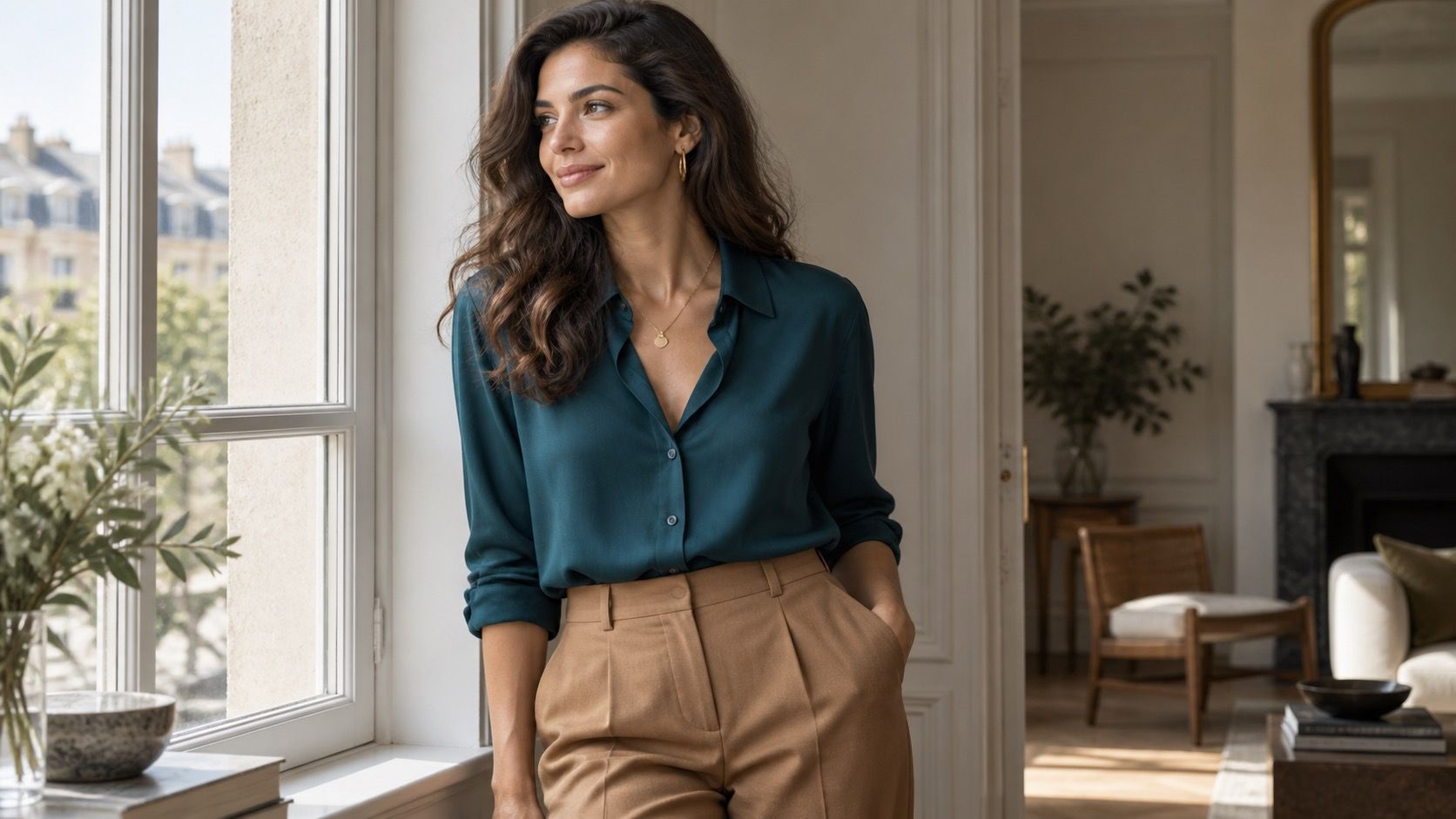
For work, use charcoal trousers, a soft white blouse, and a soft navy blazer. It reads polished without the starkness of a black suit. Swap the blouse for muted plum when you want color, and keep the shoes gray, navy, or cool taupe. A blue-gray knit over a soft white tee also handles offices with unpredictable air conditioning better than a decorative layer you remove after ten minutes.
For a weekend outfit, medium-wash straight jeans, a dusty rose sweatshirt, and mushroom sneakers make an easy base. Add a gray-blue overshirt or soft navy trench if the weather changes. For dinner, try a smoky blue dress with pewter accessories, or dark denim with a muted berry top and a charcoal jacket. These combinations look complete because their depth changes gradually, not because every item is exactly the same shade.
Travel gives a capsule a useful stress test. Pack a soft navy layer, two tops in soft white and dusty rose, denim, charcoal bottoms, one dress, and shoes in a cool neutral. If every top works with both bottoms and the layer, you can get dressed in a hotel room without spreading the entire bag across the bed. If an item only works with one particular scarf, leave it home.
Use the palette as a filter, not a rulebook
A Soft Summer color palette is a tool for editing choices, not evidence that you must identify with a season forever. Lighting, hair color, makeup, and personal taste affect what you enjoy wearing. If an item falls slightly outside the palette but makes you feel good and works with three existing pieces, it deserves a fair test. A cool denim jacket, for example, can bridge colors that are not perfectly matched.
Start with a few muted core colors you can wear close to the face, then observe what gets repeated. Soft navy, mushroom, dusty rose, and medium denim are a sensible opening set because they cover work, casual outfits, and a dressier layer. The best Soft Summer capsule wardrobe eventually looks less like a set of rules and more like a closet where nearly everything has a reason to be there.