A Deep Autumn palette is most helpful when it keeps a wardrobe from drifting into either flat darkness or a parade of unrelated warm shades. Think of the colors as ingredients with weight: espresso, forest green, deep teal, rust, and cream can look calm together when the depths are considered, even on an ordinary Tuesday in a crowded café.
Use depth as the foundation, not an afterthought
Deep Autumn outfits usually begin with a dark element that is softer than jet black but still substantial: espresso trousers, a dark olive overshirt, a tobacco leather belt, or a deep teal knit. These pieces do more than make an outfit look seasonal. They give a warm accent somewhere to land. Rust trousers with a pale beige top can seem disconnected; rust beside chocolate brown or forest green looks anchored.
Choose dark neutrals that are not black
Depth is not the same as wearing only dark clothes. Cream can be bright, and a warm ivory blouse can lift a dark skirt. The practical check is to hold the light item against the darkest one in daylight. If the contrast feels abrupt, add a middle tone such as olive, warm denim, or cognac footwear. This small transition often makes the outfit look intentional rather than divided in half.
Black is useful, but it can be a blunt tool beside warm depth. Espresso, dark chocolate, deep olive, and inky teal carry the same visual authority with more texture. An espresso blazer with cream trousers feels composed without the severity of black and white. Forest green corduroy with a dark brown boot works especially well in autumn weather because the fabrics and colors support one another rather than competing.
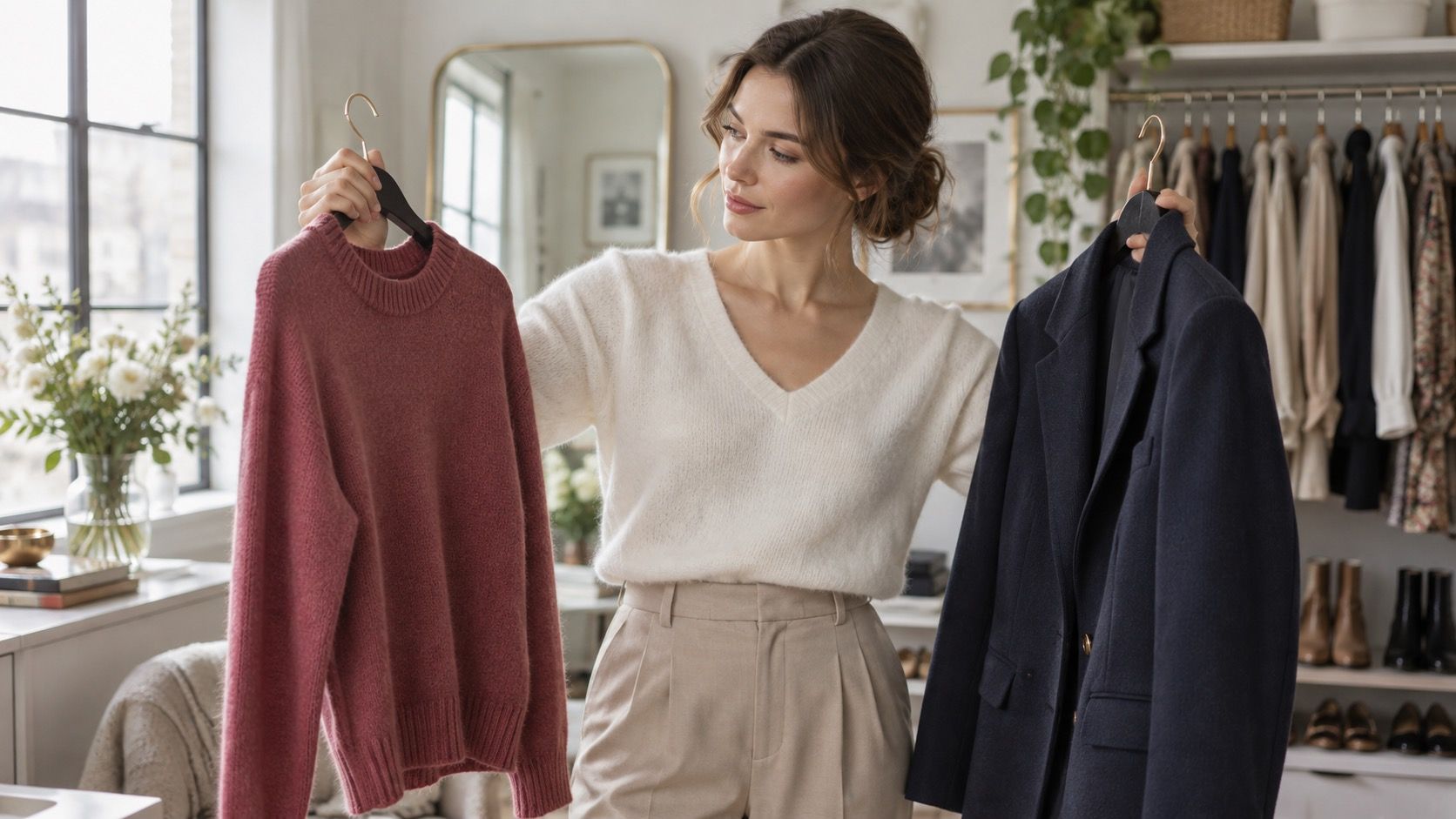
Build a quick comparison on a chair before leaving home: black trousers with a rust knit, then espresso trousers with the same knit. The better option is usually the one that lets the knit look rich rather than orange. This does not ban black. A black bag or shoe may still be the practical piece you use every day; it simply does not need to dictate every other color.
Add warmth without turning the outfit into a costume
Warm color is strongest when it appears in one or two places. A deep autumn color palette can include rust, paprika, moss, warm burgundy, and mustard, but wearing several at full strength creates more activity than most daily outfits need. For an office day, try a cream shirt, espresso trousers, and a deep teal cardigan. A rust scarf or earring is enough warmth to make the combination feel alive.
Pay attention to the undertone of red and pink. Tomato and brick red tend to sit more easily with brown and olive than blue-red cherry shades. Dusty rose can look accidental beside forest green, while a dark warm berry has enough depth to hold its place. These are experiments, not an identity test: take a phone photo by a window and compare the colors at a distance, where the overall balance is easier to see.
| Starting piece | Reliable partner | Watch for |
|---|---|---|
| Espresso trousers | Cream shirt, forest green knit | Very pale cool gray can make the warmth disappear. |
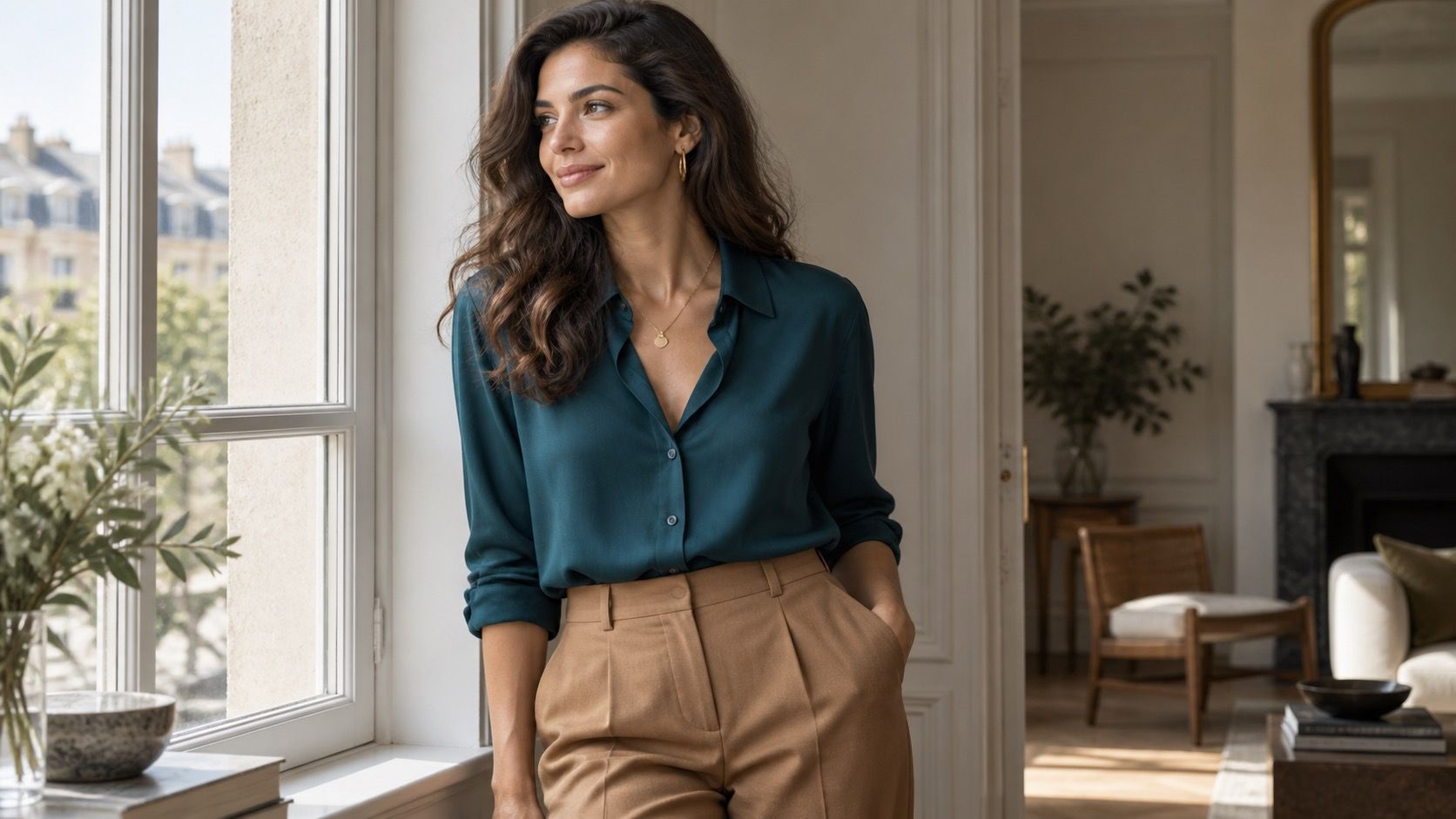
| Deep teal dress | Cognac boots, dark brown coat | Bright cobalt accessories may pull the look in two directions. |
| Rust sweater | Olive, chocolate, dark denim | Too much mustard can make the outfit look overly themed. |
| Forest green jacket | Warm ivory, espresso, deep burgundy | Keep the remaining colors lower in saturation. |
Combine texture and print with a quiet hand
Deep colors reveal fabric quickly. A forest green wool coat, matte leather boot, and cream cotton shirt can share a look because each texture is distinct. Shiny satin, patent leather, and dense velvet all in the same outfit can make even good colors feel theatrical. Choose one tactile focal point: a suede bag, ribbed knit, or corduroy trouser is usually enough.
For prints, look for a dark background and a limited set of colors. A checked scarf containing rust, brown, and cream can link a plain outfit together. A busy floral with pastel pink, black, and turquoise may be beautiful on its own but harder to use with the grounded earth tones that give Deep Autumn its coherence. If a print is doing all the talking, keep the surrounding pieces plain.
Outfit formulas for day and evening
For daytime, begin with a reliable dark neutral and one warm layer: dark denim, a cream tee, a forest green overshirt, and brown boots. It survives meetings, errands, and a change in weather without looking precious. Another easy formula is an espresso knit dress with opaque tights and a cognac belt; the belt creates shape without adding a new strong color.
Evening needs more contrast, not necessarily more brightness. Try deep teal with warm gold-toned hardware, or a dark burgundy top with charcoal-brown trousers and a cream coat. Keep one area lighter near the face if the whole outfit feels heavy. The useful part of a Deep Autumn palette is its restraint: rich colors can feel generous and grown-up when they are given room, instead of being piled on at once.
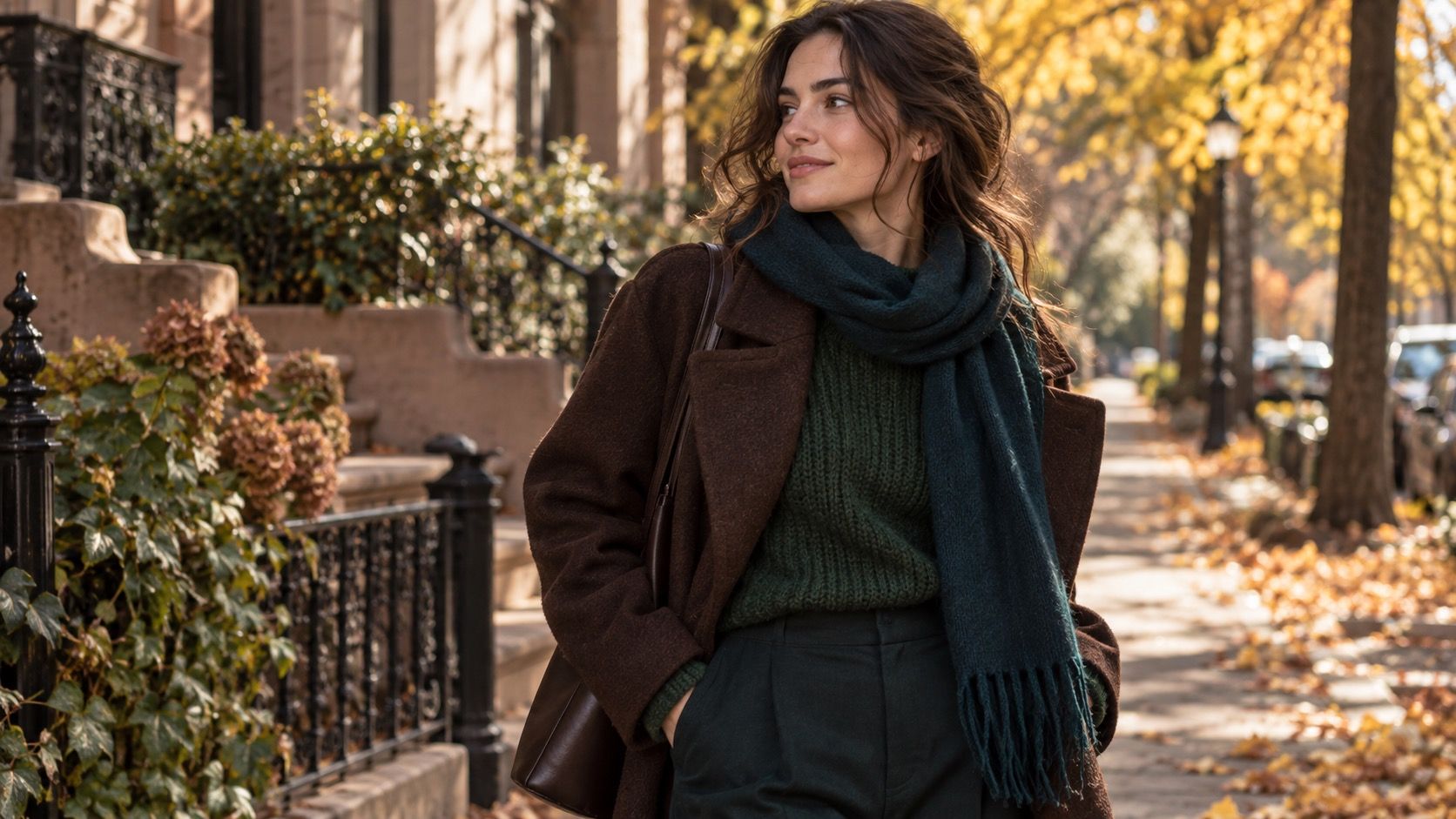
Outerwear is where a Deep Autumn wardrobe either becomes very useful or turns into a collection of beautiful single pieces. A dark olive trench can cover cream, rust, teal, and warm denim without flattening them, so it earns more wear than a coat that only works with black. For colder days, choose a chocolate or deep brown coat and leave a little of the lighter layer visible at the neck or cuff. A cream scarf gives the face a lift; a mustard scarf can work too, but it should be the main warm accent rather than one more note beside rust gloves and a paprika bag. When you are unsure, lay the coat over the outfit and judge the colors as one large shape, not as separate hangers.
Jewelry and leather can quietly set the direction. Cognac boots and a brown belt make an olive trouser and warm ivory shirt feel linked, while cool silver hardware may make the same outfit seem slightly more formal and distant. Neither choice is forbidden; use the finish that repeats somewhere else. A brushed gold earring with a dark teal knit is enough for dinner, especially when the bag has a small warm buckle. If you reach for a black shoe out of habit, add a visible brown, olive, or burgundy layer above it so the black reads as a practical anchor rather than the color that takes over the outfit.