Blonde hair, blue eyes, and fair skin can make color advice sound strangely simple: wear blue and avoid black. In practice, two people with that description can need opposite things. Ash blonde hair and cool pink skin respond differently from golden blonde hair and warm fair skin; pale blue eyes can need softness while bright eyes can take a sharper frame. The useful part of choosing color is learning how much contrast your features can carry, then using blue as one option rather than a costume.
Hair and eye color are only the opening clue
Start by separating visible features from undertone. Fair skin may lean cool, warm, neutral, or olive, and blonde hair may be ash, beige, strawberry, honey, or highlighted. That is why a powder-blue sweater can make one blonde look fresh and another look a little gray. Hold garments by your face in daylight and watch the skin, not the garment. A useful shade makes the eyes and mouth stay visible; an unhelpful one can emphasize pinkness, shadows, or sallowness.
Choose depth for soft or high-contrast features
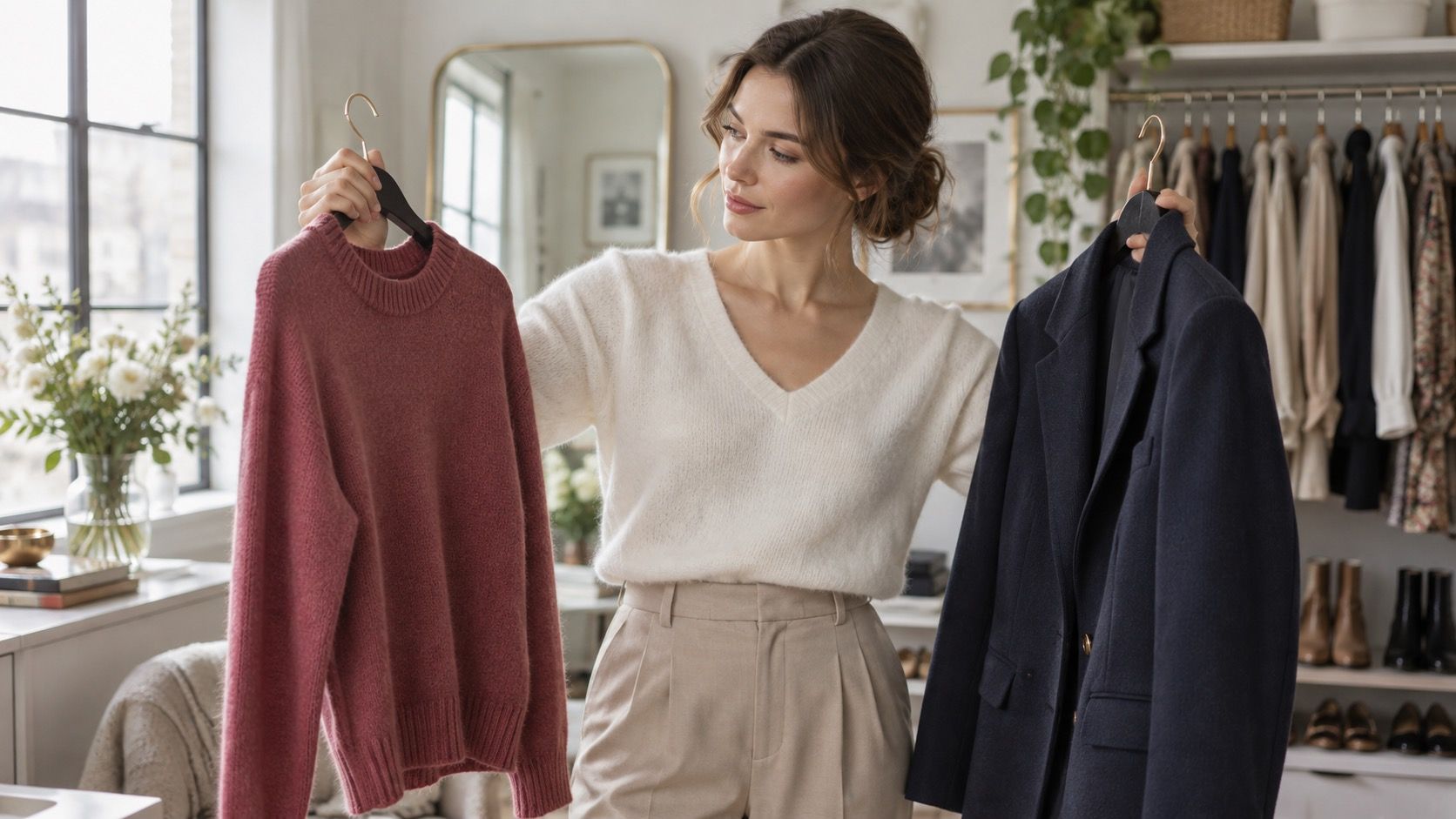
The same check applies to the best clothing colors for blonde hair blue eyes fair skin. Do not decide from a photo taken under restaurant lighting or with a phone filter. Use a plain mirror by a window, pull the hair back, and compare two versions of a color. Cool pink against peach, soft navy against black, pale denim against stark white: these pairs make the difference easier to see than a long list of universal rules.
Low-contrast features often mean pale hair, light brows, quiet eye color, and fair skin with little difference between them. They tend to look coherent in softened combinations: dusty blue with dove gray, faded denim with soft white, rose with mushroom, or sage with taupe. The goal is not to disappear into pastels. Add depth through texture, a medium shoe, or a darker jean instead of jumping immediately to black.
Higher contrast can come from dark brows, a deeper root color, bright blue eyes, or strong lip color. In that case, navy, charcoal, jewel-like teal, raspberry, and clear white may provide the needed structure. Black can work too, especially for evening, but test it with bare skin around the face. If it arrives before you do, switch to navy or deep charcoal. They often give the same polish with less severity.
| Feature effect | Colors to try first | Easy outfit pairing |
|---|---|---|
| Soft, low contrast | Dusty blue, rose, soft navy, dove gray | Pale denim with a muted pink knit |
| Clear, higher contrast | Navy, raspberry, cobalt, crisp white | White shirt with a navy jacket |
| Warm blonde or golden skin | Coral, ivory, olive, warm teal | Ivory tee with coral and tan leather |
| Ash blonde or cool skin | Blue-gray, berry, cool pink, charcoal | Berry top with dark denim |
Use blue to support the eyes, not compete with them
Blue is a large family, and its value depends on depth and temperature. Soft blue, cornflower, denim, French navy, blue-gray, and cobalt all create different effects. Pale blue can be elegant near fair skin when it has enough gray or depth; an icy, near-white blue may drain someone whose complexion is already very light. Denim is usually forgiving because its texture breaks up the color and its faded versions sit comfortably with both warm and cool blondes.
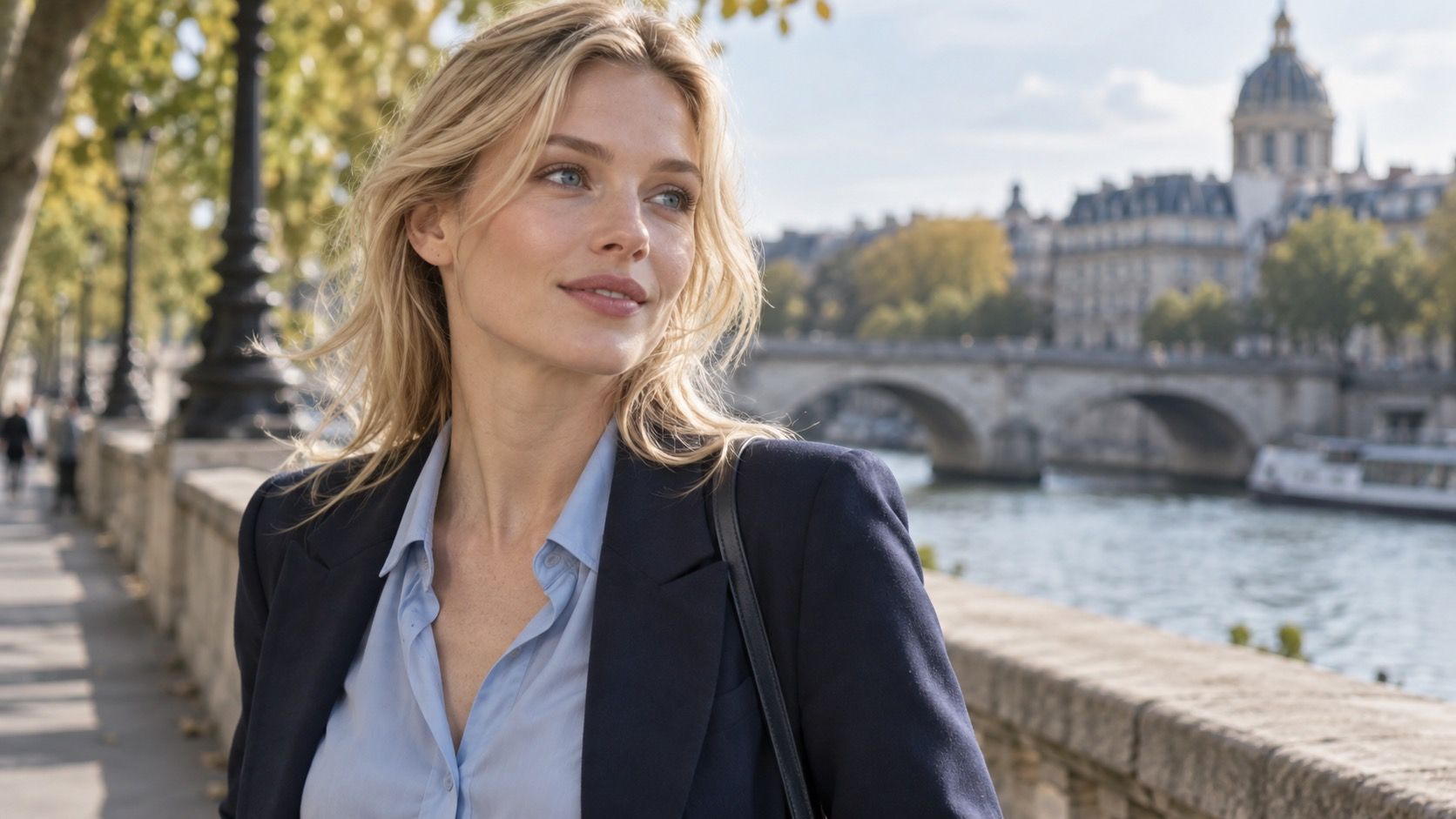
Navy is one of the safest answers when black feels harsh. Wear it in a blazer, trouser, sweater, or dress, then use a lighter top to keep the face open. Cobalt can make blue eyes look vivid, but it is strong; pair it with medium denim, gray, or soft white rather than adding more saturated pieces. A monochrome blue outfit needs at least two values, such as pale blue with navy, or it can flatten fair coloring rather than frame it.
Balance warm accents and neutral basics
Coral, warm pink, tomato red, camel, ivory, and olive can be excellent on blondes with blue eyes when the hair or skin has warmth. A coral blouse with medium-wash jeans gives the face warmth without creating a head-to-toe orange effect. If your skin is cool, try berry, blue-red, rose, or slate instead. The issue is not whether you have blonde hair; it is whether the color agrees with your skin before it echoes your hair.
For best colors for fair skin, avoid treating beige as automatically safe. Very pale beige can make fair skin look unfinished when there is no contrast at the neckline. Choose taupe, mushroom, warm camel, or blue-gray, then add a necklace, scarf, collar, or darker layer. Soft white is usually easier than bright white for gentle coloring, while clear white can look excellent with higher contrast. A neutral earns its place when it gives the outfit structure, not when it disappears.
Use repeatable formulas for casual and dressy days
For a casual weekday, wear a soft blue or ivory tee with straight-leg denim and a navy overshirt. It lets blue show up without turning the outfit into a statement. For work, a navy trouser, a pale blue shirt, and tan or gray loafers are more flexible than a black suit and suit most blonde shades. If pale blue is too cool for you, substitute warm ivory and add a blue accessory rather than forcing the shirt.
For a dressier occasion, try a berry, deep teal, or soft coral dress according to your undertone, with a quiet shoe. A navy dress is useful when you want a strong line but black feels too hard. Keep jewelry simple and let either the eye color or the accent color lead. The best result is not the one that makes your blue eyes look artificially brighter in a mirror; it is the one that still looks balanced when you see it in a candid photo a few hours later.
Blonde hair and blue eyes offer a starting palette, not a prescription. Build around the depth and temperature that your skin accepts, keep navy and denim handy, and test lighter colors against your face before buying. Once contrast is doing its job, blue becomes a useful tool rather than the only color anybody thinks you are allowed to wear.
Do not overlook the effect of a neckline. A color that feels too pale in a high crew-neck sweater may work beautifully as an open shirt, V-neck blouse, or jacket over a darker tee because it no longer sits as a solid block against fair skin. That is a useful fix for many best colors for fair skin questions: adjust the amount of color at the face before deciding that a whole family of shades is wrong.